
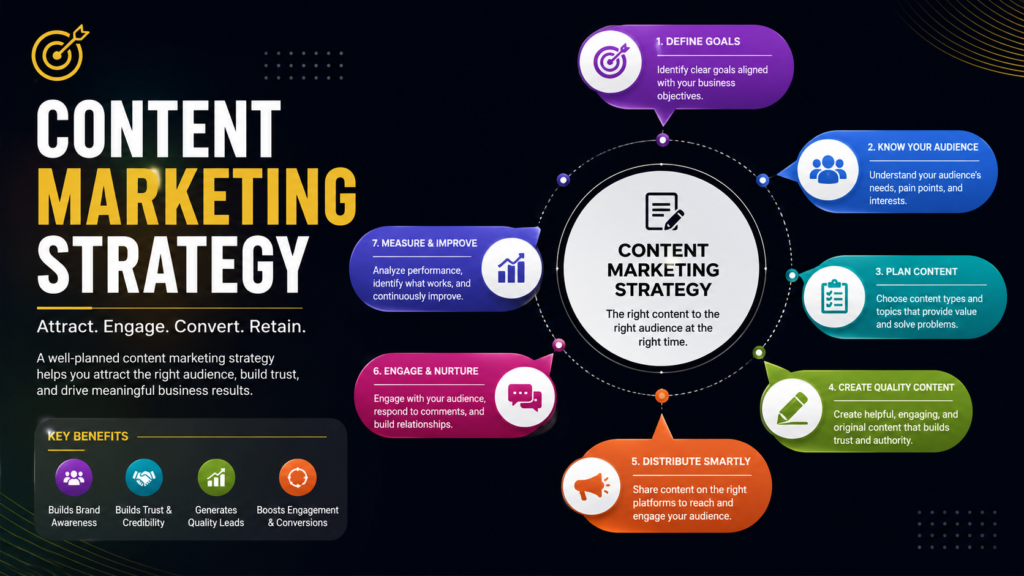
Content Marketing Strategy: The Complete Guide for a 2026
Content marketing is one of the most effective ways to attract customers, build trust, and grow a business online. Instead of directly promoting products or services, content marketing focuses on creating valuable, relevant, and consistent content that educates, entertains, or solves problems for your target audience. In 2026, businesses that invest in a strong content marketing strategy are more likely to increase website traffic, improve search engine rankings, generate quality leads, and build long-term customer relationships. A successful content marketing strategy is more than simply publishing blog posts or posting on social media. It involves understanding your audience, setting clear goals, creating high-quality content, and measuring results to improve performance over time. This guide explains the key steps to building an effective content marketing strategy. What Is Content Marketing Strategy? A content marketing strategy is a structured plan for creating, publishing, and distributing content that supports your business goals. The purpose is to attract the right audience, provide value, and encourage them to take meaningful actions, such as subscribing to a newsletter, requesting a quote, or making a purchase. Content can take many forms, including blog articles, videos, social media posts, infographics, podcasts, email newsletters, case studies, webinars, and downloadable guides. 1. Define Your Goals Every successful content marketing strategy starts with clear objectives. Before creating content, determine what you want to achieve. Common goals include: Clear goals help you measure success and create content that aligns with your business objectives. 2. Understand Your Target Audience Creating content without understanding your audience often leads to poor engagement. Research your ideal customers by identifying: Developing buyer personas helps you create content that directly addresses your audience’s needs and challenges. 3. Perform Keyword Research Keyword research helps you understand what your audience is searching for online. Use SEO tools to identify: Choose keywords with a balance of search volume and competition, then naturally include them in your titles, headings, URLs, meta descriptions, and body content. 4. Create High-Quality Content Quality content is the foundation of every successful strategy. Your content should be: Use short paragraphs, clear headings, bullet points, examples, images, and practical tips to improve readability and user experience. 5. Build a Content Calendar Consistency is essential in content marketing. A content calendar helps you plan topics, publishing dates, content formats, and promotional activities in advance. For example: Planning ahead ensures a steady flow of valuable content and keeps your marketing organized. 6. Optimize Content for SEO Even excellent content may not perform well if it isn’t optimized for search engines. SEO best practices include: SEO optimization increases the chances of your content appearing in search results and attracting organic traffic. 7. Promote Your Content Publishing content is only the first step. Promotion is equally important. Share your content through multiple channels, such as: Repurpose one piece of content into multiple formats—for example, turn a blog post into a Reel, carousel, infographic, podcast, or email newsletter—to reach different audiences. 8. Measure Performance Tracking performance helps you understand what works and where improvements are needed. Monitor important metrics such as: Regular analysis allows you to refine your strategy and focus on content that delivers the best results. 9. Update Existing Content Content marketing is an ongoing process. Regularly update older articles by: Keeping content current improves user experience and can help maintain or improve search rankings. 10. Use AI to Improve Efficiency In 2026, AI has become an important part of content marketing. AI tools can assist with: While AI increases productivity, human creativity and expertise remain essential for producing authentic, trustworthy, and engaging content. Common Content Marketing Mistakes Avoid these common mistakes: Avoiding these issues will help your content perform better over the long term. Conclusion A strong content marketing strategy is essential for building brand awareness, attracting qualified traffic, and generating sustainable business growth in 2026. Success comes from understanding your audience, setting clear goals, creating valuable content, optimizing it for SEO, promoting it effectively, and continuously measuring performance. Rather than chasing quick results, focus on consistently delivering helpful, relevant, and high-quality content that solves real problems for your audience. Over time, this approach builds trust, strengthens your online presence, and creates lasting relationships that support long-term business success.