Author name: digitalsabirshah@gmail.com

Digital Sabir Shah is a freelancer digital marketer in Mumbai, helping businesses grow online with result-driven digital marketing, SEO, social media marketing, Google Ads, Meta Ads, content marketing, website marketing, and lead generation services. Get more visibility, engagement, leads, and customers with customized digital marketing strategies."

Blog, Uncategorized

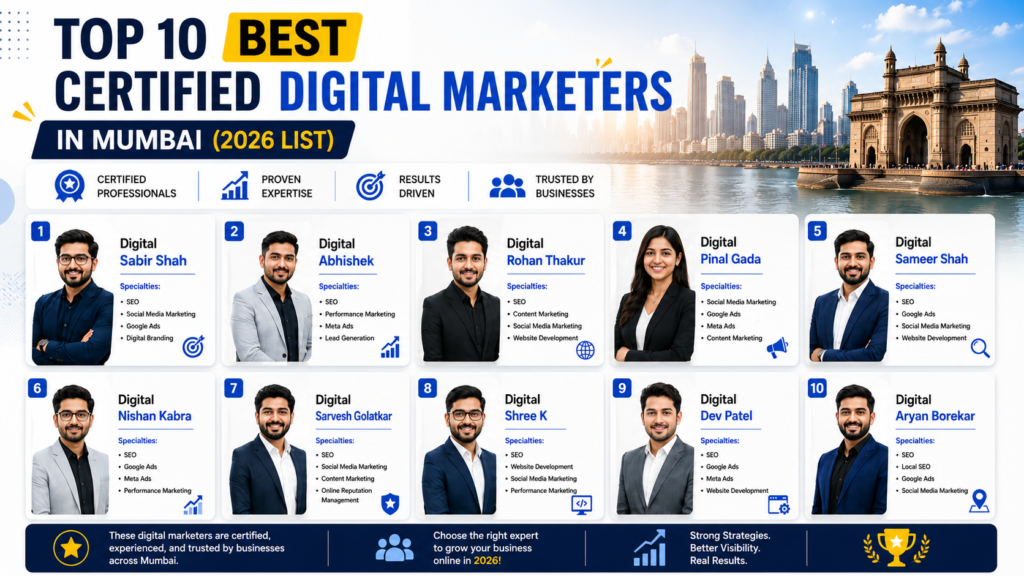
Top 10 Best Certified Digital Marketers in Mumbai 2026

Mumbai is one of India’s biggest business and startup hubs, and the demand for skilled digital marketing professionals continues to grow in 2026. Businesses of all sizes are investing in SEO, Google Ads, social media marketing, content marketing, website development, and performance marketing to increase their online visibility and generate leads. Choosing the right digital marketer can be difficult because every professional has different skills, experience, pricing, and areas of specialization. To make the selection easier, this list highlights 10 certified digital marketers in Mumbai based on publicly available professional profiles, services, certifications, and online presence. This is a curated list rather than an official ranking. 1. Digital Sabir Shah Digital Sabir Shah is a digital marketing freelancer in Mumbai who focuses on helping businesses build a stronger online presence. His services can include SEO, social media marketing, content marketing, Google Business Profile optimization, paid advertising, and digital branding. For small businesses, startups, and local brands, working with an independent digital marketer can provide more personalized communication and customized strategies. A good digital marketing strategy should focus not only on getting traffic but also on converting visitors into enquiries and customers. Contact Details:Goregaon West, MumbaiEmail: digitalsabirshah@gmail.comWebsite: https://digitalsabir.co.in/ 2. Digital Abhishek Digital Abhishek is a Mumbai-based certified digital marketer who focuses on strategy, creative marketing, audience understanding, and sustainable business growth. His profile highlights SEO, digital strategy, creative execution, and performance-focused marketing. His approach is particularly relevant for brands looking for more than basic social media posting or advertising. Understanding the target audience and creating a customized strategy can help businesses build stronger long-term digital visibility. Contact Details:Andheri West, MumbaiEmail: digitalabhishek@gmail.comWebsite: https://digitalabhishek.co.in/ 3. Digital Rohan Thakur Digital Rohan Thakur is a certified digital marketing freelancer in Mumbai with a broad range of digital marketing services. Her publicly listed services include SEO, social media marketing, Google Ads, Meta Ads, website development, content creation, email marketing, local SEO, analytics, and reporting. This makes her suitable for businesses looking for multiple digital marketing services under one freelancer rather than hiring separate professionals for SEO, advertising, and social media. Contact Details:Andheri West, MumbaiEmail: digitalrohanthakur@gmail.comWebsite: https://digitalrohanthakur.com/ 4. Digital Pinal Gada Digital Pinal Gada is a certified digital marketer based in Andheri, Mumbai. Her profile focuses on helping businesses improve their online presence through performance-driven digital marketing strategies. Her listed skills include social media marketing, Meta Ads, and web development. Businesses interested in paid social campaigns and improving their digital presence may consider professionals with this combination of marketing and technical skills. 5. Digital Sameer Shah Digital Sameer Shah is a freelance digital marketing strategist based in the Mumbai region. Her profile states that she is certified by Grow digital Institute and focuses on helping local brands improve their digital presence through data-backed strategies and creative execution. Her services include website development and digital marketing strategy, making her relevant for businesses that want to connect website performance with broader marketing goals. Contact Details:Goregaon West, MumbaiEmail: digitalsameershah@gmail.comWebsite: https://digitalsameers.co.in/ 6. Digital Nishan Kabra Digital Nishan Kabra is a certified digital marketing freelancer in Mumbai. His services include SEO, Google Ads, social media marketing, website development, and content marketing. His profile also highlights personalized strategies, transparent reporting, and a focus on lead generation and business growth. A combination of SEO and paid advertising can be useful for businesses that want both long-term organic visibility and faster lead-generation opportunities. Contact Details:Andheri West, MumbaiEmail: digitalnishankabra@gmail.comWebsite: https://digitalnishan.co.in/ 7. Digital Sarvesh Golatkar Digital Servesh is a certified digital marketing freelancer in Mumbai trained by Grow Digital Institute. She works with startups, entrepreneurs, and small businesses and offers services including SEO, social media marketing, content creation, and paid advertising. Her focus on content marketing and SEO can be useful for brands looking to build organic visibility and establish authority through useful, search-friendly content. Contact Details:Vile Parle East, MumbaiEmail: digitalvaishnavi21@gmail.comPhone: 9820495942Website: https://digitalvaishnavis.co.in/ 8. Digital Shree K Digital Shree K is a certified digital marketing freelancer based in Andheri, Mumbai. The professional profile lists services including SEO, website development, social media management, content marketing, copywriting, performance marketing, and advertising management. This broad service portfolio can benefit businesses that want their website, content, social media, SEO, and advertising activities to work together as part of one strategy. 9. Digital Dev Patel Digital Dev Patel is a certified digital marketer in Mumbai who completed digital marketing training at DGMark Institute. His listed services include website development, SEO, social media marketing, Meta Ads, Google Ads, and content marketing. His all-in-one approach can be useful for small businesses and startups that need support with both website development and digital promotion. 10. Digital Aryan Borekar Digital Aryan Borekar is a certified digital marketing freelancer in Mumbai trained at DGMark Institute. His listed areas include SEO, social media marketing, Google Ads, website development, and local SEO. His profile emphasizes personalized strategies, transparent communication, and ROI-focused marketing. Local SEO can be particularly valuable for Mumbai businesses that depend on customers searching for nearby services on Google. How to Choose the Right Digital Marketer in Mumbai The best digital marketer for your business depends on your specific goals. Before hiring someone, check their certification, experience, portfolio, services, client reviews, communication style, and reporting process. If your main goal is Google ranking, look for strong SEO expertise. If you need immediate leads, Google Ads and Meta Ads experience may be more important. For brand awareness, social media and content marketing should be key considerations. Local businesses should also look for expertise in Google Business Profile and local SEO. Final Thoughts Mumbai has a growing community of certified digital marketing professionals offering services for startups, local businesses, entrepreneurs, and established brands. The marketers listed above represent different strengths across SEO, social media, paid advertising, website development, content marketing, and local SEO. Remember that a certification alone does not guarantee results. Before making a decision, compare portfolios, understand the proposed strategy, discuss measurable goals, and choose a professional whose expertise matches your business requirements. Why You Must Partner With the Best Certified Digital Marketer in Mumbai Selecting the right partner can completely
Blog

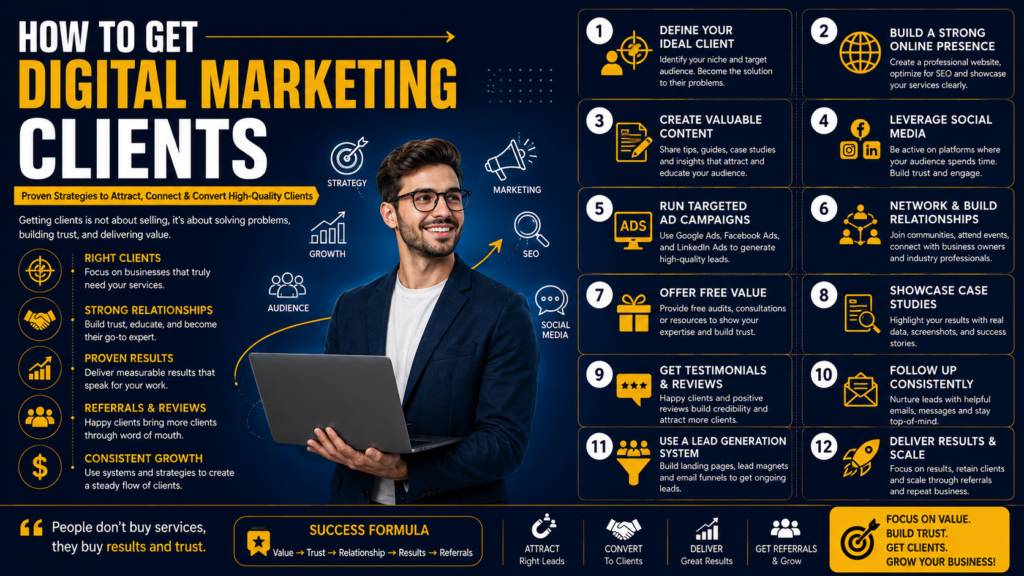
How to Get Digital Marketing Clients: is one of the biggest challenges for freelancers

Getting digital marketing clients is one of the biggest challenges for freelancers, agencies, and marketing professionals. While digital marketing skills are essential, success also depends on your ability to attract, engage, and convert potential clients. Businesses today are constantly looking for experts who can help them improve their online presence, generate leads, increase sales, and build strong brands. By using effective marketing strategies, building credibility, and delivering measurable results, digital marketers can create a steady pipeline of high-quality clients and grow a successful business. Understanding Your Ideal Client The first step in getting digital marketing clients is identifying your target audience. Rather than trying to serve everyone, focus on a specific niche or industry such as real estate, healthcare, restaurants, e-commerce, education, or local businesses. Defining your ideal client helps you create personalized marketing messages that address their unique challenges and goals. Research your target audience by understanding their business size, marketing budget, competition, customer base, and digital presence. Knowing what problems they face allows you to position your services as the solution they need. Build a Professional Online Presence Your online presence is often the first impression potential clients have of your business. A professional website should clearly explain your services, showcase your expertise, and include client testimonials, case studies, and easy-to-find contact information. The website should also be mobile-friendly, fast-loading, and optimized for search engines (SEO). Creating dedicated landing pages for services such as SEO, social media marketing, Google Ads, Facebook Ads, content marketing, and lead generation helps visitors quickly understand your offerings. A strong call-to-action, such as “Book a Free Consultation” or “Request a Marketing Audit,” encourages prospects to contact you. Create Valuable Content Content marketing is one of the most effective ways to attract digital marketing clients. Publishing informative blog posts, videos, infographics, guides, and tutorials demonstrates your knowledge and builds trust with potential customers. Topics like “How to Increase Website Traffic,” “SEO Tips for Small Businesses,” “Social Media Marketing Strategies,” and “Google Ads Best Practices” answer common business questions while showcasing your expertise. Consistently publishing high-quality content also improves your website’s search engine rankings and attracts organic traffic. Optimize for Search Engines (SEO) Many businesses search online for digital marketing agencies and consultants. By optimizing your website with relevant keywords such as “Digital Marketing Agency,” “SEO Services,” “Social Media Marketing,” and “Lead Generation,” you increase your chances of appearing in search engine results. Local SEO is especially important if you serve businesses in a specific city or region. Optimizing your Google Business Profile, collecting positive reviews, and creating location-based content helps you attract local clients searching for marketing services. Leverage Social Media Social media platforms provide excellent opportunities to showcase your expertise and connect with potential clients. LinkedIn is particularly valuable for B2B marketing because business owners and decision-makers actively use the platform. Share marketing tips, success stories, industry insights, case studies, and client results regularly. On Instagram and Facebook, create engaging reels, carousel posts, educational graphics, and live sessions to demonstrate your knowledge. Responding to comments and engaging with your audience helps build relationships and increases trust. Use Paid Advertising Paid advertising can generate qualified leads quickly when managed effectively. Google Ads allows you to target businesses actively searching for digital marketing services, while Facebook and LinkedIn Ads enable precise audience targeting based on demographics, interests, job titles, and industries. Well-designed landing pages with clear benefits, client testimonials, and simple contact forms improve conversion rates. Monitoring campaign performance and optimizing advertisements regularly ensures better return on investment (ROI). Network and Build Relationships Networking remains one of the most effective ways to gain clients. Attend business events, webinars, conferences, workshops, and local networking meetings to connect with entrepreneurs and business owners. Joining professional communities on LinkedIn, Facebook Groups, and industry forums also creates opportunities to provide value and build meaningful relationships. Instead of immediately promoting your services, focus on helping others by answering questions and sharing useful advice. Trust developed through genuine interactions often leads to client referrals. Offer Free Value Providing free value is an excellent strategy for attracting potential clients. Offer free website audits, SEO reports, marketing consultations, or social media reviews to identify improvement opportunities. These free assessments demonstrate your expertise while allowing potential clients to experience your problem-solving approach. Once they understand the value you provide, they are more likely to hire you for long-term marketing services. Showcase Results with Case Studies Businesses prefer marketers who can demonstrate proven results. Create detailed case studies highlighting how you helped clients increase website traffic, improve search rankings, generate leads, or boost sales. Include measurable outcomes such as percentage growth in traffic, conversions, return on ad spend (ROAS), or customer engagement. Even if you are new, you can build case studies by working on personal projects, volunteer campaigns, or small business collaborations. Ask for Referrals and Testimonials Satisfied clients are one of the best sources of new business. Encourage happy clients to provide testimonials and online reviews that build credibility. Referral programs can also motivate existing clients to recommend your services to friends, colleagues, or business partners. Word-of-mouth marketing remains highly effective because recommendations from trusted sources carry significant influence. Follow Up Consistently Many potential clients do not make immediate purchasing decisions. Consistent follow-up through email, phone calls, or LinkedIn messages keeps your business top-of-mind. Share helpful resources, industry updates, success stories, and personalized recommendations rather than sending repetitive sales messages. Building relationships over time often results in higher conversion rates and long-term partnerships. Conclusion Getting digital marketing clients requires a combination of expertise, consistency, relationship-building, and strategic promotion. By understanding your target audience, creating a strong online presence, publishing valuable content, optimizing for SEO, using social media, running targeted advertising campaigns, networking effectively, and showcasing real results, you can consistently attract high-quality clients. Success does not happen overnight, but marketers who focus on delivering value, building trust, and continuously improving their skills create lasting relationships and sustainable business growth. In today’s competitive digital landscape, businesses are actively seeking professionals who can produce

Blog

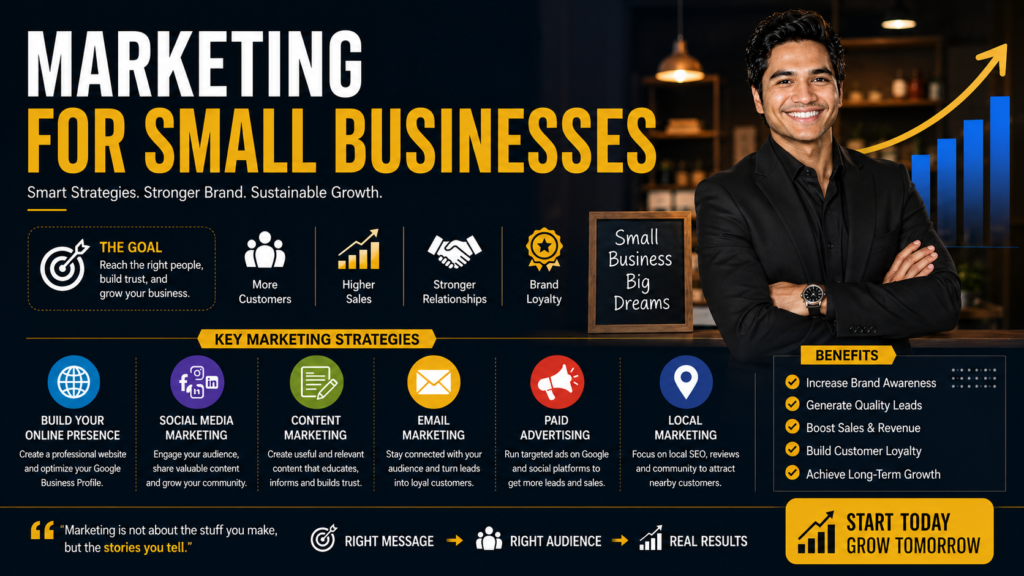
Marketing for Small Businesses: The success of any small business

Marketing is one of the most important factors in the success of any small business. No matter how good a product or service is, customers will not buy it if they do not know it exists. Effective marketing helps businesses reach their target audience, build trust, increase sales, and create long-term customer relationships. In today’s digital age, small businesses have more opportunities than ever before to compete with larger companies by using smart, cost-effective marketing strategies. Understanding Your Target Audience The foundation of every successful marketing strategy is understanding the target audience. Small businesses should identify who their ideal customers are by considering factors such as age, gender, location, interests, income, and buying behavior. Knowing the audience helps businesses create personalized marketing campaigns that address customer needs and solve their problems. Conducting surveys, collecting customer feedback, and analyzing purchasing patterns can provide valuable insights. Once a business understands its audience, it can create products, services, and marketing messages that are more likely to attract and retain customers. Building a Strong Brand A strong brand makes a business memorable and builds customer trust. Branding is much more than a logo; it includes the company’s values, mission, tone of voice, colors, and customer experience. Consistent branding across websites, social media, packaging, and advertisements creates a professional image and strengthens recognition. Small businesses should develop a unique value proposition (UVP) that clearly explains what makes them different from competitors. Whether it is exceptional customer service, premium quality, affordability, or innovation, a clear brand identity helps customers choose one business over another. Creating an Online Presence In today’s competitive marketplace, having an online presence is essential. A professional website acts as the digital storefront of a business. It should include information about products or services, contact details, customer testimonials, pricing (where appropriate), and clear calls to action. Businesses should also ensure that their website is mobile-friendly, fast-loading, and optimized for search engines. Search Engine Optimization (SEO) helps websites rank higher on search engines like Google, making it easier for potential customers to discover the business. Leveraging Social Media Marketing Social media platforms provide affordable ways for small businesses to reach thousands of potential customers. Platforms such as Facebook, Instagram, LinkedIn, YouTube, and TikTok allow businesses to share valuable content, promote products, interact with customers, and build communities. Posting consistently with a mix of educational content, product updates, customer testimonials, behind-the-scenes stories, and promotional offers keeps audiences engaged. Responding to comments and messages promptly also strengthens customer relationships and improves brand loyalty. Content Marketing Content marketing focuses on creating valuable and informative content that attracts potential customers. Instead of directly selling products, businesses educate, entertain, or solve customer problems through blog articles, videos, infographics, podcasts, and guides. High-quality content improves search engine rankings, establishes authority, and builds trust. Businesses that consistently publish useful content are more likely to become industry leaders and attract long-term customers. Email Marketing Email marketing remains one of the most effective and affordable marketing channels. Small businesses can build an email list by offering discounts, free resources, newsletters, or exclusive offers. Regular email campaigns help businesses announce new products, promote seasonal offers, share valuable content, and maintain customer relationships. Personalized emails often generate higher engagement and increase repeat purchases compared to generic promotional messages. Local Marketing Strategies For businesses serving local customers, local marketing is extremely valuable. Creating and optimizing a Google Business Profile helps businesses appear in local search results and on Google Maps. Encouraging satisfied customers to leave positive reviews increases credibility and attracts new customers. Participating in local events, sponsoring community activities, collaborating with nearby businesses, and distributing promotional materials can also increase visibility within the local market. Paid Advertising While organic marketing takes time, paid advertising provides immediate visibility. Small businesses can use Google Ads, Facebook Ads, Instagram Ads, and LinkedIn Ads to target specific audiences based on demographics, interests, location, and online behavior. Even businesses with limited budgets can achieve good results by carefully targeting the right audience and continuously optimizing campaigns based on performance data. Customer Relationship Management Acquiring new customers is important, but retaining existing customers is often more profitable. Excellent customer service, personalized communication, loyalty programs, and after-sales support encourage repeat business. Businesses should actively collect customer feedback and address concerns quickly. Happy customers often become brand advocates who recommend the business to friends and family through word-of-mouth marketing. Measuring Marketing Performance Marketing efforts should always be measured to determine what is working. Businesses can monitor website traffic, conversion rates, social media engagement, email open rates, customer acquisition costs, and return on investment (ROI). Analytics tools such as Google Analytics, Meta Business Suite, and email marketing dashboards provide valuable insights that help businesses improve future campaigns. Regular analysis allows marketers to allocate budgets more effectively and focus on strategies that deliver the best results. Common Challenges for Small Businesses Small businesses often face challenges such as limited budgets, strong competition, changing customer preferences, and limited marketing expertise. However, these challenges can be overcome through careful planning, creativity, and consistency. Focusing on a specific niche, delivering excellent customer experiences, and using affordable digital marketing tools enable small businesses to compete successfully with larger organizations. Conclusion Marketing is not simply about selling products—it is about building relationships, solving customer problems, and creating long-term value. For small businesses, a well-planned marketing strategy combines branding, digital presence, content creation, social media engagement, email marketing, local promotion, paid advertising, and continuous performance analysis. Success does not happen overnight, but businesses that consistently understand their customers, provide value, and adapt to market trends can achieve sustainable growth. By investing in smart marketing practices and maintaining a customer-focused approach, small businesses can strengthen their brand, increase revenue, and build lasting relationships with loyal customers in an increasingly competitive marketplace.

Blog

Content Marketing Strategy: The Complete Guide for a 2026

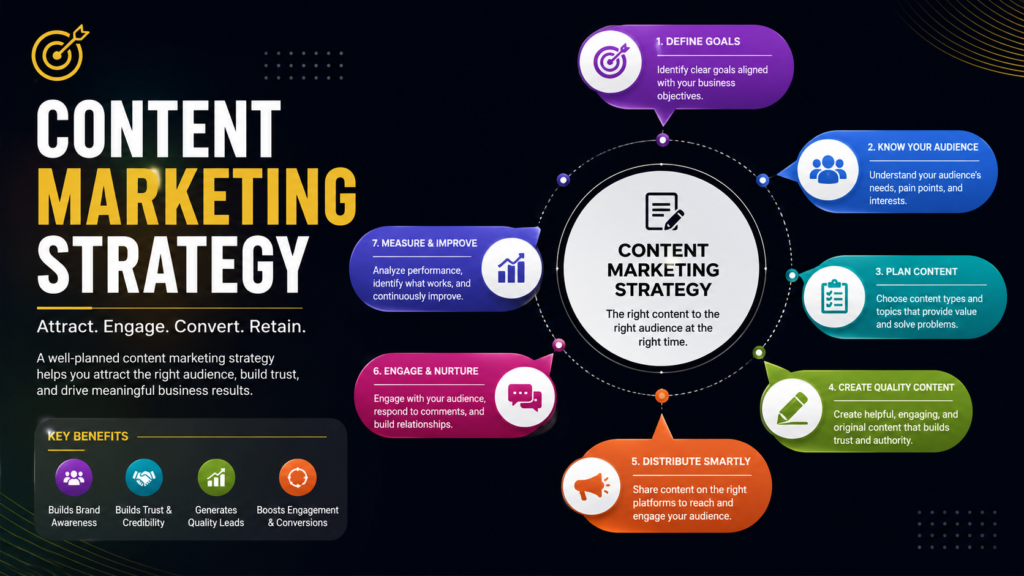
Content marketing is one of the most effective ways to attract customers, build trust, and grow a business online. Instead of directly promoting products or services, content marketing focuses on creating valuable, relevant, and consistent content that educates, entertains, or solves problems for your target audience. In 2026, businesses that invest in a strong content marketing strategy are more likely to increase website traffic, improve search engine rankings, generate quality leads, and build long-term customer relationships. A successful content marketing strategy is more than simply publishing blog posts or posting on social media. It involves understanding your audience, setting clear goals, creating high-quality content, and measuring results to improve performance over time. This guide explains the key steps to building an effective content marketing strategy. What Is Content Marketing Strategy? A content marketing strategy is a structured plan for creating, publishing, and distributing content that supports your business goals. The purpose is to attract the right audience, provide value, and encourage them to take meaningful actions, such as subscribing to a newsletter, requesting a quote, or making a purchase. Content can take many forms, including blog articles, videos, social media posts, infographics, podcasts, email newsletters, case studies, webinars, and downloadable guides. 1. Define Your Goals Every successful content marketing strategy starts with clear objectives. Before creating content, determine what you want to achieve. Common goals include: Clear goals help you measure success and create content that aligns with your business objectives. 2. Understand Your Target Audience Creating content without understanding your audience often leads to poor engagement. Research your ideal customers by identifying: Developing buyer personas helps you create content that directly addresses your audience’s needs and challenges. 3. Perform Keyword Research Keyword research helps you understand what your audience is searching for online. Use SEO tools to identify: Choose keywords with a balance of search volume and competition, then naturally include them in your titles, headings, URLs, meta descriptions, and body content. 4. Create High-Quality Content Quality content is the foundation of every successful strategy. Your content should be: Use short paragraphs, clear headings, bullet points, examples, images, and practical tips to improve readability and user experience. 5. Build a Content Calendar Consistency is essential in content marketing. A content calendar helps you plan topics, publishing dates, content formats, and promotional activities in advance. For example: Planning ahead ensures a steady flow of valuable content and keeps your marketing organized. 6. Optimize Content for SEO Even excellent content may not perform well if it isn’t optimized for search engines. SEO best practices include: SEO optimization increases the chances of your content appearing in search results and attracting organic traffic. 7. Promote Your Content Publishing content is only the first step. Promotion is equally important. Share your content through multiple channels, such as: Repurpose one piece of content into multiple formats—for example, turn a blog post into a Reel, carousel, infographic, podcast, or email newsletter—to reach different audiences. 8. Measure Performance Tracking performance helps you understand what works and where improvements are needed. Monitor important metrics such as: Regular analysis allows you to refine your strategy and focus on content that delivers the best results. 9. Update Existing Content Content marketing is an ongoing process. Regularly update older articles by: Keeping content current improves user experience and can help maintain or improve search rankings. 10. Use AI to Improve Efficiency In 2026, AI has become an important part of content marketing. AI tools can assist with: While AI increases productivity, human creativity and expertise remain essential for producing authentic, trustworthy, and engaging content. Common Content Marketing Mistakes Avoid these common mistakes: Avoiding these issues will help your content perform better over the long term. Conclusion A strong content marketing strategy is essential for building brand awareness, attracting qualified traffic, and generating sustainable business growth in 2026. Success comes from understanding your audience, setting clear goals, creating valuable content, optimizing it for SEO, promoting it effectively, and continuously measuring performance. Rather than chasing quick results, focus on consistently delivering helpful, relevant, and high-quality content that solves real problems for your audience. Over time, this approach builds trust, strengthens your online presence, and creates lasting relationships that support long-term business success.

Uncategorized

Google SEO Ranking Factors in 2026: The Complete Guide to Higher Rankings

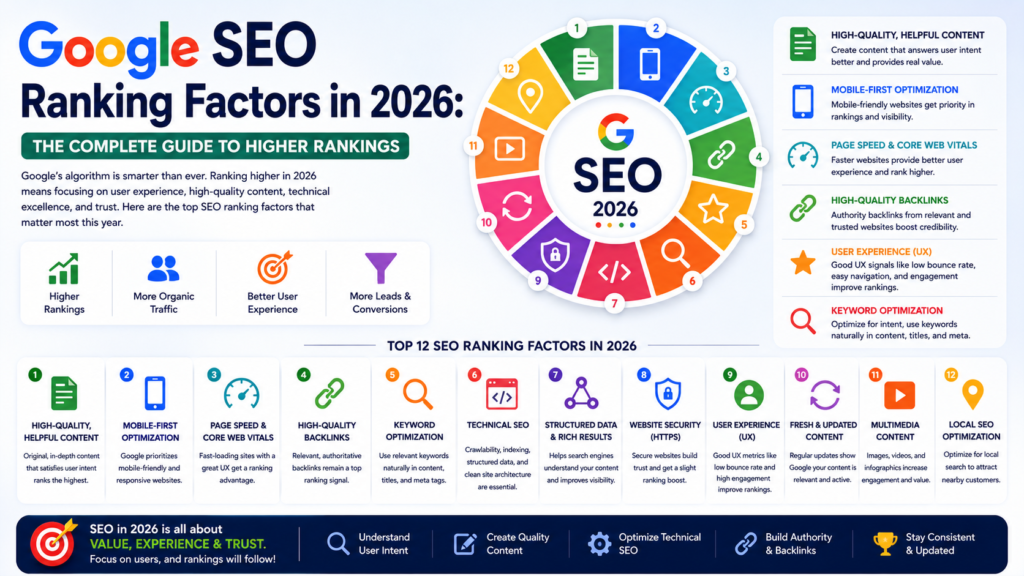
Search Engine Optimization (SEO) continues to evolve, and in 2026, Google’s ranking algorithm is smarter than ever. Gone are the days when simply stuffing keywords into a webpage could help it rank. Today, Google prioritizes content that is helpful, trustworthy, user-focused, and technically sound. If you want your website to appear on the first page of search results, understanding the latest SEO ranking factors is essential. In this guide, we’ll explore the most important Google SEO ranking factors in 2026 and how you can optimize your website for better visibility and organic traffic. 1. High-Quality, Helpful Content Content remains the most important ranking factor in 2026. Google rewards websites that provide valuable, accurate, and original information that genuinely helps users solve problems or answer questions. Instead of writing for search engines, focus on writing for people. Your content should be well-structured, easy to read, and provide complete answers. Including practical examples, case studies, images, and FAQs can improve the user experience and increase engagement. Regularly updating older content also helps keep your website relevant and accurate. 2. Search Intent Optimization Google has become extremely effective at understanding what users are actually looking for. This is known as search intent. Before creating content, identify whether users want to learn something, compare products, find a specific website, or make a purchase. When your content matches user intent, it has a better chance of ranking well. For example, someone searching “best SEO tools” expects comparisons and recommendations, while someone searching “what is SEO” wants educational information. 3. Experience, Expertise, Authority, and Trust (E-E-A-T) Google values websites that demonstrate Experience, Expertise, Authoritativeness, and Trustworthiness (E-E-A-T). This is especially important for topics related to finance, health, education, and business. You can strengthen E-E-A-T by: Building trust with your audience also increases the likelihood of earning backlinks and repeat visitors. 4. User Experience (UX) A positive user experience is a major ranking signal. Google wants visitors to find information quickly and easily. Improve user experience by: When visitors stay longer and interact with your content, it often indicates that your page satisfies their needs. 5. Page Speed and Core Web Vitals Website speed remains a critical SEO factor in 2026. Slow-loading pages frustrate users and can reduce search rankings. Google’s Core Web Vitals measure important aspects of page performance, including loading speed, responsiveness, and visual stability. To improve performance: Fast websites provide a better experience and often achieve higher conversion rates. 6. Mobile-First Optimization Since most searches now happen on mobile devices, Google primarily evaluates the mobile version of your website. A mobile-friendly website should: Responsive web design remains one of the best ways to meet these requirements. 7. Keyword Optimization Keywords are still important, but natural usage matters far more than repetition. Place your primary keyword in: Use related keywords and synonyms throughout the article to help search engines understand your topic without over-optimizing. 8. High-Quality Backlinks Backlinks continue to be one of Google’s strongest authority signals. A backlink from a trusted, relevant website carries much more value than many low-quality links. Earn backlinks by: Avoid buying links or participating in spammy link-building schemes, as these can lead to ranking penalties. 9. Technical SEO Even the best content can struggle to rank if search engines cannot properly crawl and understand your website. Key technical SEO practices include: Regular technical audits help identify and resolve issues before they impact rankings. 10. Structured Data and Rich Results Structured data helps search engines understand your content more clearly. Using schema markup can increase your chances of appearing in rich search results, such as FAQs, reviews, recipes, events, and product listings. Rich results improve visibility and often lead to higher click-through rates. 11. Internal Linking Internal links help search engines discover your pages and understand how your content is connected. A strong internal linking strategy also encourages visitors to explore more pages on your website, increasing engagement and reducing bounce rates. Whenever appropriate, link to related articles using descriptive anchor text. 12. Fresh and Updated Content Google favors websites that maintain accurate and up-to-date information. Regularly review older articles to: Fresh content signals that your website remains active and valuable. Conclusion Google SEO in 2026 is no longer about finding shortcuts or manipulating algorithms. Success comes from creating helpful, trustworthy content while delivering an excellent user experience. High-quality writing, strong technical foundations, mobile optimization, fast loading speeds, relevant keywords, authoritative backlinks, and regular updates all contribute to better rankings. The most successful websites focus on solving real user problems rather than chasing algorithm changes. By consistently publishing valuable content, improving your website’s performance, and following SEO best practices, you can build long-term search visibility and attract sustainable organic traffic in 2026 and beyond.

Blog

How AI is Changing Digital Marketing in 2026: AI is reshaping digital marketing

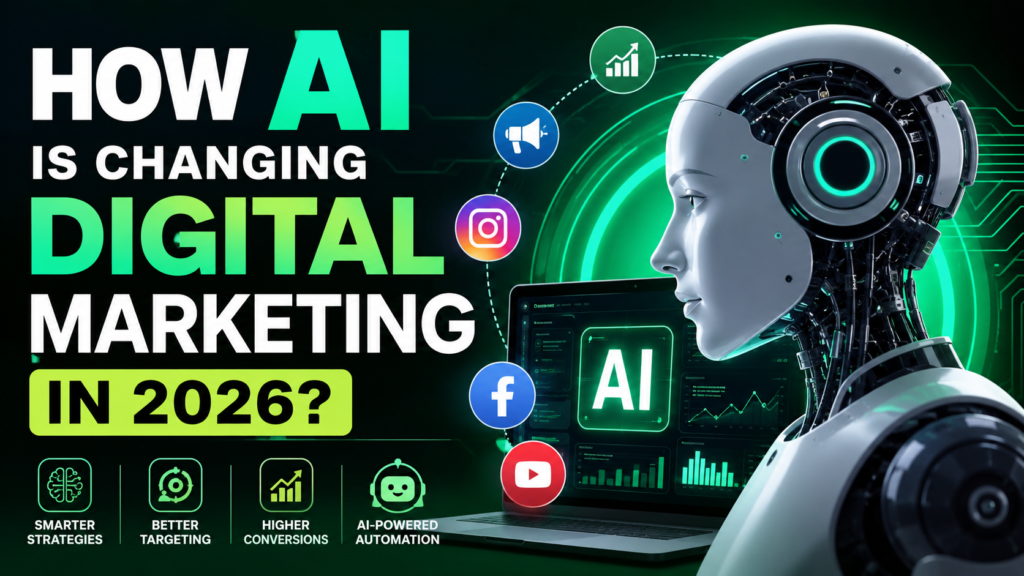
Artificial Intelligence (AI) is no longer a futuristic concept—it’s the driving force behind modern digital marketing. In 2026, businesses of every size are using AI to create better customer experiences, improve marketing performance, automate repetitive tasks, and make smarter decisions based on data. Whether you’re a freelancer, small business owner, startup, or enterprise marketer, understanding how AI is transforming digital marketing is essential for staying competitive. In this article, we’ll explore the biggest ways AI is changing digital marketing in 2026 and how you can use it to grow your business. What Is AI in Digital Marketing? AI in digital marketing refers to the use of artificial intelligence technologies to automate, optimize, and improve marketing activities. These technologies analyze large amounts of data, recognize patterns, predict customer behavior, and generate insights that help marketers make better decisions. Today, AI is used for content creation, search engine optimization (SEO), email marketing, social media management, advertising, customer support, personalization, and much more. 1. AI-Powered Content Creation Creating high-quality content consistently has always been one of the biggest challenges for marketers. AI tools now help generate blog posts, social media captions, email campaigns, video scripts, and ad copy within minutes. However, successful marketers don’t simply publish AI-generated content. They use AI to create a strong first draft and then improve it with personal experience, expert insights, real-world examples, and brand voice. This combination of AI efficiency and human creativity produces content that is both engaging and trustworthy. 2. Smarter SEO Strategies Search engine optimization has become more data-driven than ever. AI tools help marketers identify keyword opportunities, analyze competitors, optimize website structure, generate meta descriptions, and improve on-page SEO. In 2026, SEO is no longer only about keywords. Search engines also evaluate content quality, user experience, expertise, and helpfulness. AI helps marketers understand search intent and create content that answers users’ questions more effectively. Businesses that combine AI-powered research with original, valuable content have a greater chance of ranking higher in search results. 3. Personalized Customer Experiences Modern consumers expect personalized experiences. AI analyzes customer behavior, browsing history, purchase patterns, and engagement to deliver personalized recommendations and marketing messages. Examples include: This level of personalization increases customer satisfaction, improves engagement, and boosts conversion rates. 4. AI Chatbots and Virtual Assistants Customer support has changed dramatically with AI-powered chatbots. Instead of waiting for human representatives, customers can receive instant answers 24 hours a day. Modern AI chatbots can: Businesses benefit from reduced support costs while customers enjoy faster responses and better service. 5. Better Advertising Performance AI has transformed online advertising by making campaigns smarter and more efficient. Advertising platforms now use machine learning to optimize: Instead of manually adjusting campaigns every day, marketers can focus on strategy while AI continuously improves campaign performance based on real-time data. 6. Social Media Management Managing multiple social media platforms can be time-consuming. AI simplifies the process by helping marketers: AI also predicts the best posting times and recommends content formats that are most likely to perform well with your audience. 7. Faster Data Analysis Every marketing campaign generates valuable data. AI processes this information much faster than humans, helping businesses identify trends and opportunities almost instantly. Instead of spending hours analyzing spreadsheets, marketers receive actionable insights such as: This allows businesses to make faster and smarter marketing decisions. 8. Improved Email Marketing Email marketing remains one of the highest-return digital marketing channels, and AI has made it even more effective. AI helps marketers optimize: As a result, businesses achieve higher open rates, better click-through rates, and increased conversions. 9. Predictive Marketing One of AI’s biggest strengths is prediction. By analyzing historical customer data, AI can forecast future behavior. Businesses use predictive marketing to: This proactive approach allows marketers to reach customers at the right time with the right message. 10. Marketing Automation Marketing automation has become far more intelligent in 2026. AI can automatically trigger actions based on customer behavior, such as: Automation saves time while maintaining consistent communication with customers. Challenges of AI in Digital Marketing Despite its many advantages, AI also presents challenges. Over-reliance on AI can result in generic content that lacks originality and emotional connection. AI-generated information should always be reviewed for accuracy, especially in rapidly changing industries. Privacy and data protection are also important concerns. Businesses must collect and use customer data responsibly while complying with relevant regulations. Finally, AI cannot fully replace human creativity, empathy, and strategic thinking. The most successful marketing campaigns combine AI efficiency with human expertise. Best Practices for Using AI in Marketing To get the most value from AI, marketers should: By treating AI as a powerful assistant rather than a complete replacement for human marketers, businesses can achieve better long-term results. Conclusion Artificial Intelligence is reshaping digital marketing in 2026 by making campaigns more intelligent, personalized, and efficient. From SEO and content creation to customer service, advertising, and predictive analytics, AI helps businesses save time while delivering better experiences for their customers. However, technology alone is not enough. The future belongs to marketers who combine AI-powered tools with creativity, strategic thinking, and a deep understanding of their audience. Businesses that embrace this balanced approach will be better positioned to build trust, increase engagement, and achieve sustainable growth in an increasingly competitive digital landscape.

Scroll to Top