
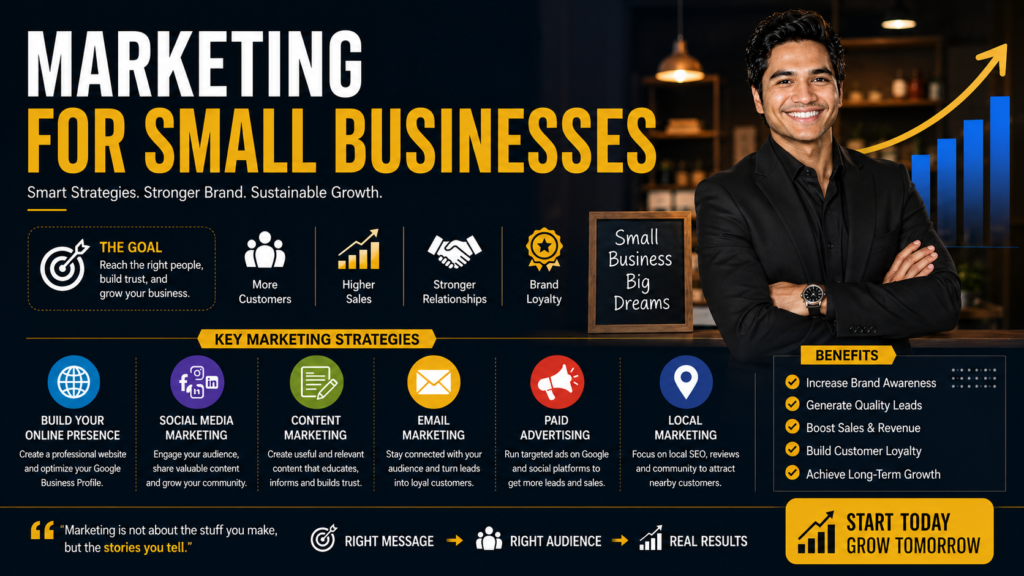
Marketing for Small Businesses: The success of any small business
Marketing is one of the most important factors in the success of any small business. No matter how good a product or service is, customers will not buy it if they do not know it exists. Effective marketing helps businesses reach their target audience, build trust, increase sales, and create long-term customer relationships. In today’s digital age, small businesses have more opportunities than ever before to compete with larger companies by using smart, cost-effective marketing strategies. Understanding Your Target Audience The foundation of every successful marketing strategy is understanding the target audience. Small businesses should identify who their ideal customers are by considering factors such as age, gender, location, interests, income, and buying behavior. Knowing the audience helps businesses create personalized marketing campaigns that address customer needs and solve their problems. Conducting surveys, collecting customer feedback, and analyzing purchasing patterns can provide valuable insights. Once a business understands its audience, it can create products, services, and marketing messages that are more likely to attract and retain customers. Building a Strong Brand A strong brand makes a business memorable and builds customer trust. Branding is much more than a logo; it includes the company’s values, mission, tone of voice, colors, and customer experience. Consistent branding across websites, social media, packaging, and advertisements creates a professional image and strengthens recognition. Small businesses should develop a unique value proposition (UVP) that clearly explains what makes them different from competitors. Whether it is exceptional customer service, premium quality, affordability, or innovation, a clear brand identity helps customers choose one business over another. Creating an Online Presence In today’s competitive marketplace, having an online presence is essential. A professional website acts as the digital storefront of a business. It should include information about products or services, contact details, customer testimonials, pricing (where appropriate), and clear calls to action. Businesses should also ensure that their website is mobile-friendly, fast-loading, and optimized for search engines. Search Engine Optimization (SEO) helps websites rank higher on search engines like Google, making it easier for potential customers to discover the business. Leveraging Social Media Marketing Social media platforms provide affordable ways for small businesses to reach thousands of potential customers. Platforms such as Facebook, Instagram, LinkedIn, YouTube, and TikTok allow businesses to share valuable content, promote products, interact with customers, and build communities. Posting consistently with a mix of educational content, product updates, customer testimonials, behind-the-scenes stories, and promotional offers keeps audiences engaged. Responding to comments and messages promptly also strengthens customer relationships and improves brand loyalty. Content Marketing Content marketing focuses on creating valuable and informative content that attracts potential customers. Instead of directly selling products, businesses educate, entertain, or solve customer problems through blog articles, videos, infographics, podcasts, and guides. High-quality content improves search engine rankings, establishes authority, and builds trust. Businesses that consistently publish useful content are more likely to become industry leaders and attract long-term customers. Email Marketing Email marketing remains one of the most effective and affordable marketing channels. Small businesses can build an email list by offering discounts, free resources, newsletters, or exclusive offers. Regular email campaigns help businesses announce new products, promote seasonal offers, share valuable content, and maintain customer relationships. Personalized emails often generate higher engagement and increase repeat purchases compared to generic promotional messages. Local Marketing Strategies For businesses serving local customers, local marketing is extremely valuable. Creating and optimizing a Google Business Profile helps businesses appear in local search results and on Google Maps. Encouraging satisfied customers to leave positive reviews increases credibility and attracts new customers. Participating in local events, sponsoring community activities, collaborating with nearby businesses, and distributing promotional materials can also increase visibility within the local market. Paid Advertising While organic marketing takes time, paid advertising provides immediate visibility. Small businesses can use Google Ads, Facebook Ads, Instagram Ads, and LinkedIn Ads to target specific audiences based on demographics, interests, location, and online behavior. Even businesses with limited budgets can achieve good results by carefully targeting the right audience and continuously optimizing campaigns based on performance data. Customer Relationship Management Acquiring new customers is important, but retaining existing customers is often more profitable. Excellent customer service, personalized communication, loyalty programs, and after-sales support encourage repeat business. Businesses should actively collect customer feedback and address concerns quickly. Happy customers often become brand advocates who recommend the business to friends and family through word-of-mouth marketing. Measuring Marketing Performance Marketing efforts should always be measured to determine what is working. Businesses can monitor website traffic, conversion rates, social media engagement, email open rates, customer acquisition costs, and return on investment (ROI). Analytics tools such as Google Analytics, Meta Business Suite, and email marketing dashboards provide valuable insights that help businesses improve future campaigns. Regular analysis allows marketers to allocate budgets more effectively and focus on strategies that deliver the best results. Common Challenges for Small Businesses Small businesses often face challenges such as limited budgets, strong competition, changing customer preferences, and limited marketing expertise. However, these challenges can be overcome through careful planning, creativity, and consistency. Focusing on a specific niche, delivering excellent customer experiences, and using affordable digital marketing tools enable small businesses to compete successfully with larger organizations. Conclusion Marketing is not simply about selling products—it is about building relationships, solving customer problems, and creating long-term value. For small businesses, a well-planned marketing strategy combines branding, digital presence, content creation, social media engagement, email marketing, local promotion, paid advertising, and continuous performance analysis. Success does not happen overnight, but businesses that consistently understand their customers, provide value, and adapt to market trends can achieve sustainable growth. By investing in smart marketing practices and maintaining a customer-focused approach, small businesses can strengthen their brand, increase revenue, and build lasting relationships with loyal customers in an increasingly competitive marketplace.