Google SEO Ranking Factors in 2026: The Complete Guide to Higher Rankings
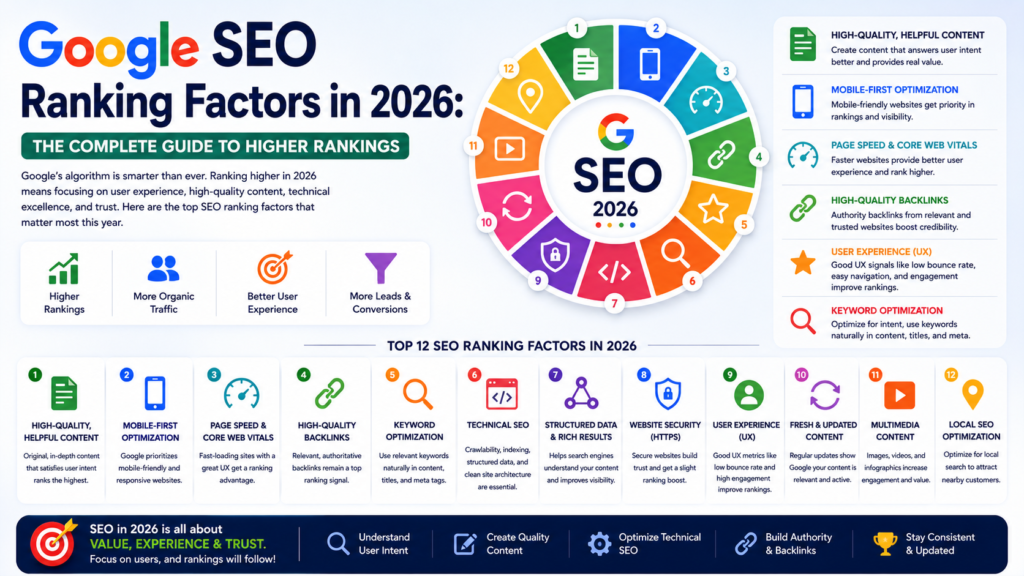
Search Engine Optimization (SEO) continues to evolve, and in 2026, Google’s ranking algorithm is smarter than ever. Gone are the days when simply stuffing keywords into a webpage could help it rank. Today, Google prioritizes content that is helpful, trustworthy, user-focused, and technically sound. If you want your website to appear on the first page of search results, understanding the latest SEO ranking factors is essential. In this guide, we’ll explore the most important Google SEO ranking factors in 2026 and how you can optimize your website for better visibility and organic traffic. 1. High-Quality, Helpful Content Content remains the most important ranking factor in 2026. Google rewards websites that provide valuable, accurate, and original information that genuinely helps users solve problems or answer questions. Instead of writing for search engines, focus on writing for people. Your content should be well-structured, easy to read, and provide complete answers. Including practical examples, case studies, images, and FAQs can improve the user experience and increase engagement. Regularly updating older content also helps keep your website relevant and accurate. 2. Search Intent Optimization Google has become extremely effective at understanding what users are actually looking for. This is known as search intent. Before creating content, identify whether users want to learn something, compare products, find a specific website, or make a purchase. When your content matches user intent, it has a better chance of ranking well. For example, someone searching “best SEO tools” expects comparisons and recommendations, while someone searching “what is SEO” wants educational information. 3. Experience, Expertise, Authority, and Trust (E-E-A-T) Google values websites that demonstrate Experience, Expertise, Authoritativeness, and Trustworthiness (E-E-A-T). This is especially important for topics related to finance, health, education, and business. You can strengthen E-E-A-T by: Building trust with your audience also increases the likelihood of earning backlinks and repeat visitors. 4. User Experience (UX) A positive user experience is a major ranking signal. Google wants visitors to find information quickly and easily. Improve user experience by: When visitors stay longer and interact with your content, it often indicates that your page satisfies their needs. 5. Page Speed and Core Web Vitals Website speed remains a critical SEO factor in 2026. Slow-loading pages frustrate users and can reduce search rankings. Google’s Core Web Vitals measure important aspects of page performance, including loading speed, responsiveness, and visual stability. To improve performance: Fast websites provide a better experience and often achieve higher conversion rates. 6. Mobile-First Optimization Since most searches now happen on mobile devices, Google primarily evaluates the mobile version of your website. A mobile-friendly website should: Responsive web design remains one of the best ways to meet these requirements. 7. Keyword Optimization Keywords are still important, but natural usage matters far more than repetition. Place your primary keyword in: Use related keywords and synonyms throughout the article to help search engines understand your topic without over-optimizing. 8. High-Quality Backlinks Backlinks continue to be one of Google’s strongest authority signals. A backlink from a trusted, relevant website carries much more value than many low-quality links. Earn backlinks by: Avoid buying links or participating in spammy link-building schemes, as these can lead to ranking penalties. 9. Technical SEO Even the best content can struggle to rank if search engines cannot properly crawl and understand your website. Key technical SEO practices include: Regular technical audits help identify and resolve issues before they impact rankings. 10. Structured Data and Rich Results Structured data helps search engines understand your content more clearly. Using schema markup can increase your chances of appearing in rich search results, such as FAQs, reviews, recipes, events, and product listings. Rich results improve visibility and often lead to higher click-through rates. 11. Internal Linking Internal links help search engines discover your pages and understand how your content is connected. A strong internal linking strategy also encourages visitors to explore more pages on your website, increasing engagement and reducing bounce rates. Whenever appropriate, link to related articles using descriptive anchor text. 12. Fresh and Updated Content Google favors websites that maintain accurate and up-to-date information. Regularly review older articles to: Fresh content signals that your website remains active and valuable. Conclusion Google SEO in 2026 is no longer about finding shortcuts or manipulating algorithms. Success comes from creating helpful, trustworthy content while delivering an excellent user experience. High-quality writing, strong technical foundations, mobile optimization, fast loading speeds, relevant keywords, authoritative backlinks, and regular updates all contribute to better rankings. The most successful websites focus on solving real user problems rather than chasing algorithm changes. By consistently publishing valuable content, improving your website’s performance, and following SEO best practices, you can build long-term search visibility and attract sustainable organic traffic in 2026 and beyond.